


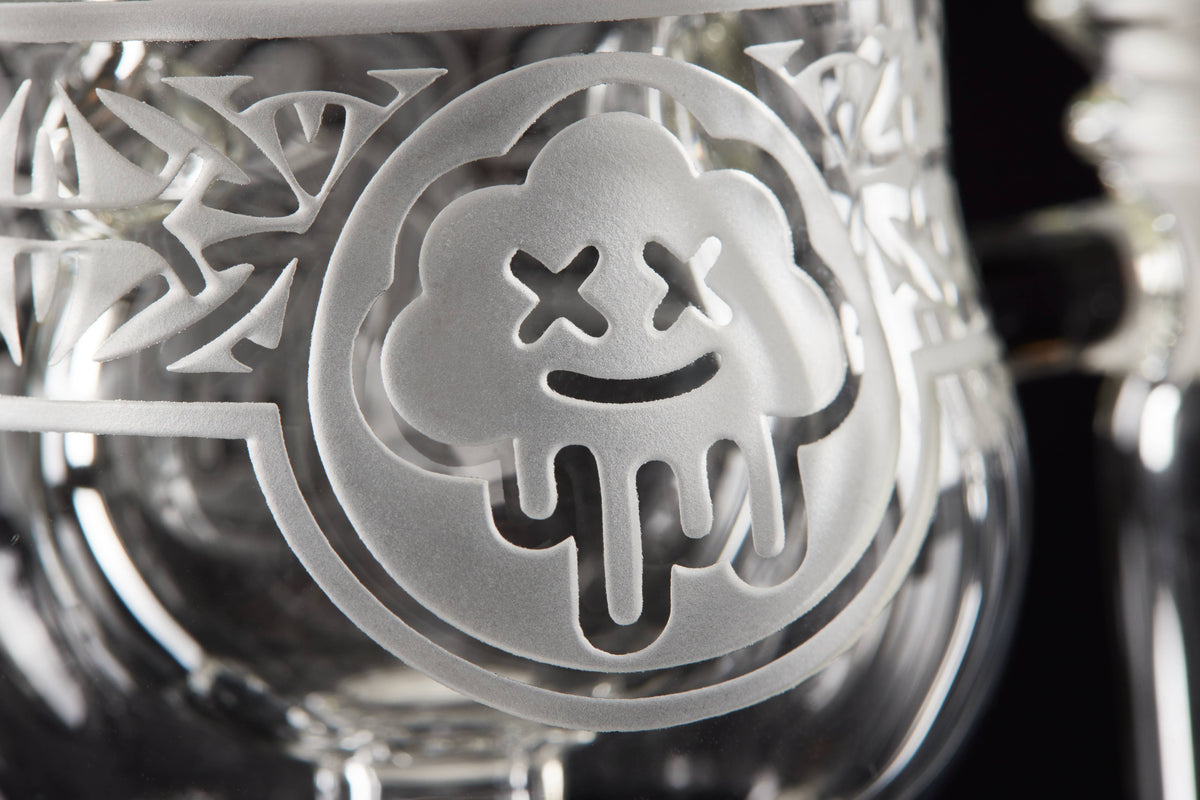

Why glass matters
If you've been using the same budget rig for years, you might wonder what distinguishes premium glass. The difference comes down to material, science, and construction quality.
Flavor purity
Borosilicate glass is chemically inert — it doesn't interact with heat or botanicals. When you heat your concentrate or flower, you're tasting only what you put in. The material's stability means no interference with flavor profiles, which is why it's the standard for quality dab rigs and bongs.
Heat resistance
Quality borosilicate handles extreme temperature swings without cracking. You can torch a banger, add cold water to your rig, and the piece stays structurally sound. That thermal shock resistance comes from the specific composition — a mix that includes silica and boron trioxide designed for lab equipment that needs to survive real stress.
Durability over time
Borosilicate glass maintains its clarity and structural integrity indefinitely. Clean it properly, and a well-made piece will perform the same way in five years as it did on day one.
Visual clarity
You can see what's happening. Water level, percolation action, residue buildup — glass shows you everything. That visibility isn't just aesthetic; it helps you maintain your piece properly and understand how design affects function.
The handmade difference
Artisan glassblowers control every detail: wall thickness, weld integrity, joint angles, and percolator precision. Factory production optimizes for speed and cost, often sacrificing the details that affect a piece's performance over time.
Types of glass: What you're actually buying
Not all glass is created equal. Understanding the difference between materials helps you know what you're paying for and what performance to expect.
Borosilicate glass (scientific glass)
This is the standard for quality pieces. Borosilicate contains approximately 15% boron trioxide, which significantly enhances thermal resistance and durability compared to regular soda-lime glass. Originally developed for laboratory glassware, it's why your piece can handle torch heat without shattering.
Key characteristics:
- Withstands rapid temperature changes
- Exceptionally clear and resistant to scratching
- Higher melting point makes it harder to work with (requires more skill)
- More expensive than soft glass due to material cost and labor intensity
- Maintains structural integrity over years of use
Soft glass (soda-lime glass)
Soft glass is composed primarily of silica, with small amounts of sodium and calcium oxides. It's called "soft" because it melts at lower temperatures, making it easier to work with and allowing for more intricate color work and sculptural details.
Key characteristics:
- Lower heat resistance — not ideal for high-temp applications like dabbing
- Takes color incredibly well, allowing for vibrant artistic details
- More affordable due to lower material cost and easier working properties
- Typically used for decorative elements or pieces that won't see extreme heat
- Can crack from thermal shock if heated and cooled rapidly
The practical difference
For functional pieces — such as rigs, bongs, and pipes that you'll actually use regularly — borosilicate is worth it. The durability and heat resistance justify the cost. Soft glass shines in decorative elements, such as pendants, marbles, and art pieces, where thermal performance doesn't matter but visual impact does.
Many heady pieces combine both: borosilicate for the functional structure, soft glass for intricate color work, and decorative details. This hybrid approach maximizes both performance and aesthetics.
What to look for
Quality borosilicate has a slightly different refractive quality than soft glass — it's exceptionally clear with minimal distortion. Wall thickness should be consistent (hold it up to light and look for variations). Welds where pieces connect should be smooth and fully integrated, not bumpy or visibly separate. If a piece claims to be borosilicate but feels suspiciously light or shows inconsistent thickness, question the quality.
Handmade vs. mass-produced: Why it matters
The price gap between a $50 bong and a $500 piece isn't arbitrary. Understanding what goes into handmade glass helps contextualize the investment.
Labor and skill
Every handmade piece represents hours of highly skilled work. Glassblowers train for years to master the techniques required to create consistent, functional pieces. They're managing multiple heat sources, timing, gravity, and the physics of molten glass — all while executing an artistic vision. That expertise commands fair compensation.
Quality control
When one artisan creates a piece from start to finish, they control every variable. Wall thickness stays consistent. Joints align properly. Percolators function as designed. Mass production optimizes for throughput, not perfection. Quality varies batch to batch, and defects that a craftsperson would catch can slip through factory QC.
Material quality
Handmade pieces typically use premium materials. Artisans invest in high-quality borosilicate, imported color glass, and proper tools because their reputation depends on the quality of what they produce. Factory operations minimize material costs, sometimes using lower-grade glass that meets basic specifications but doesn't perform or last as well.
Design innovation
Independent glassblowers push the craft forward. They experiment with new percolator designs, invent techniques, and creatively solve functional problems. Mass production copies what works and standardizes it. If you want something that represents the current edge of glass design, you're looking at handmade.
Long-term value
A well-made artisan piece can last for decades with proper care. Factory glass might last a few years before joints loosen, percs lose efficiency, or structural issues develop. The upfront cost difference narrows significantly when you factor in replacement cycles.
The counterpoint
Not everyone needs or wants a $500 piece. Mass-produced glass has its place: learning what you like, pieces you won't stress about breaking, travel rigs, gifts. The key is understanding what you're getting and setting expectations accordingly. A $70 rig can be perfectly functional for daily use — just don't expect it to perform or last as well as its handmade equivalent.