





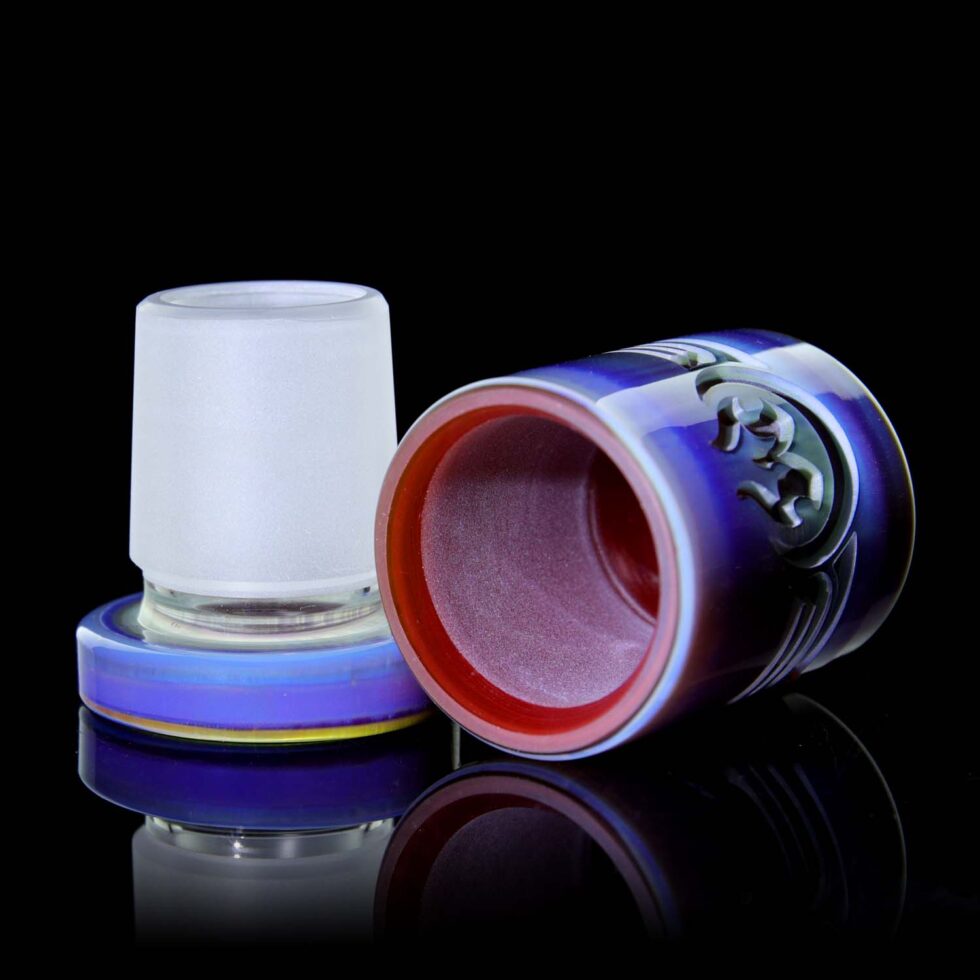


What makes a piece "heady"?
You've seen the term everywhere: "heady glass," "heady rig," "heady collection." But what does it actually mean?
At its core, "heady" refers to glass that prioritizes artistic expression alongside, or sometimes over, pure functionality. Heady pieces are handmade, one-of-a-kind works where the glassblower's creativity and technical skill take center stage. These aren't production pieces. They're functional art.
The characteristics that define heady glass:
Artistic techniques
Heady pieces showcase advanced glassworking skills: intricate line work, sculptural elements, color application that requires multiple layers and precise heat control, and techniques like fuming (using precious metals to create color-shifting effects), millies (complex patterns embedded in the glass), or collaborative work where multiple artists contribute to a single piece.
Individuality
Every heady piece is unique. Even when an artist creates multiple pieces in the same style, variations in color placement, exact proportions, and hand-formed elements ensure no two are identical. You're not buying a product — you're buying that specific piece.
Material quality
Heady artists work with premium borosilicate and high-end color glass, often imported from European manufacturers like Northstar or Glass Alchemy. These materials cost significantly more than standard glass, but they allow for colors and effects that are impossible with cheaper alternatives.
Functional consideration
Despite the artistic focus, truly heady glass still functions well. The best heady artists understand percolation, draw resistance, and joint ergonomics. The piece might resemble a sculpture, but it moves smoothly and efficiently.
Cultural recognition
Heady glass exists within a community of collectors, artists, and enthusiasts who recognize influential makers, track evolving techniques, and appreciate pieces within the context of glass art history. Owning heady glass means participating in that culture.
Techniques that drive value
Understanding what goes into creating heady glass helps contextualize pricing and appreciate the craftsmanship that goes into it.
Line work
Creating perfectly straight, evenly spaced lines in molten glass requires exceptional control and precision. Artists lay thin strands of colored glass called "stringers" onto the piece's surface, then melt them in precisely to create patterns. Complex line work can add hours to production time.
Color layering and fading
Smooth color transitions (called "fades" or "blends") require applying multiple shades of glass in precise sequence and controlling heat to fuse them seamlessly. Done well, colors flow into each other naturally. Done poorly, you get harsh boundaries or muddy mixing.
Sculptural elements
Adding three-dimensional features — such as creatures, faces, and abstract forms — requires modeling skills beyond standard glassblowing. The artist shapes molten glass with tools while managing heat, gravity, and timing to create intricate designs. These elements often require multiple reheating cycles and precision attachment to the base piece.
Fuming with precious metals
Silver and gold fuming creates color-shifting, iridescent effects. Artists vaporize precious metals in the flame and deposit microscopic particles onto the glass surface. Light refracts through these particles differently depending on viewing angle, creating that distinctive "heady" shimmer. Real fuming costs money — silver and gold aren't cheap — and requires skill to apply evenly.
Millies and murrine
Millies are cross-sections of pre-made, patterned glass canes. Artists create complex designs in miniature, then pull them into long canes that get sliced and applied to pieces. Creating good millies is an art form in itself; integrating them seamlessly into a piece requires additional skill.
Collaboration pieces
Sometimes, multiple artists collaborate on a single piece, each contributing their unique specialty. One person creates the base form, another adds sculptural work, and a third applies the color. These collaborations combine diverse artistic visions and technical skills into pieces that no single artist could create on their own.
Price and value: What you're actually paying for
Heady glass pricing confuses people. A rig might cost $2,000. A pipe with a similar function might be $200 or $2,500. Understanding value in the heady market requires looking beyond pure functionality.
Material costs
Premium borosilicate isn't expensive relative to the total price, but high-end color glass can be. Some exotic colors cost hundreds of dollars per pound. Precious metals for fuming add to material costs. Artists who invest in quality materials pass those costs to buyers.
Labor and skill
A complex, heady piece might represent 10-30 hours of skilled labor. Glassblowing requires years of practice to master. Artists who consistently execute advanced techniques deserve compensation that reflects their expertise. You're not paying $200/hour for labor — you're paying for someone who spent years developing abilities that let them work at that level.
Failure rate
Not every piece makes it through. Glass cracks during the production process. Color doesn't blend as planned. A sculptural element doesn't attach properly. Artists build these losses into their pricing. When you buy a finished piece, you're partially covering the attempts that didn't work out.
Artist reputation
Established artists command higher prices because demand exceeds supply. Their work is proven, their techniques are refined, and collectors want pieces from their portfolio. Emerging artists offer better value per dollar but less certainty about long-term collectibility. Both are valid choices depending on your goals.
Market dynamics
Like any art market, heady glass prices reflect what collectors will pay. Limited production, high demand, and social media visibility all affect pricing. A piece might be "worth" $3,000 because similar work from that artist sells consistently at that price, not because material + labor objectively equals that number.
Investment vs. use value
Some people buy heady glass to use daily and don't care about resale value. Others collect pieces that might appreciate. Both approaches are valid. Understanding your own motivation helps you evaluate whether a piece's price makes sense for you specifically.
Shopping tips: How to buy heady glass confidently
Research the artist
Before spending serious money, understand who made the piece. Take a look at their portfolio (most artists maintain an active Instagram presence). See if their style resonates with you beyond just one piece. Check if they have a gallery representation or documented sales history. Understand their reputation within the glass community.
Examine the piece in person when possible
Photos don't capture everything. In-person inspection lets you check weld quality, feel weight distribution (properly balanced pieces feel better in use), assess color depth and fuming quality, and confirm that percs and joints function as designed.
Ask about function
Don't assume a heady piece will hit well just because it's expensive. Ask about draw resistance, percolator type, water line, and any functional quirks. Good artists design for both aesthetics and performance, but some prioritize form over function. Know what you're getting.
Understand the technique
If you're paying premium prices, understand what techniques justify the cost. Are you paying for precious metal fuming, complex sculpture, innovative design, or an artist's reputation? Know what you're valuing so you can make informed comparisons between pieces.
Consider practical issues
Will you actually use this piece, or is it a collection item? If you're using it, think about cleaning access, durability of delicate elements, and replacement part availability. Some heady pieces are gorgeous but impractical for regular use.
Buy what speaks to you
Trends and hype drive the heady market. Ignore it if a piece doesn't resonate with you. You're the one who'll own it. Buy glass that genuinely appeals to your aesthetic sense, not what Instagram suggests is currently desirable.
Factor in protection
Heady pieces need proper storage and transport. Budget for a quality case if you're spending four figures on glass. Some artists include cases; many don't. Protect your investment.
Recognizing quality: What separates good from great
Not all heady glass is created equal. Here's what to look for:
Weld integrity
Where pieces connect — joint to base, perc to chamber, mouthpiece to neck — should show smooth, fully integrated glass. Poor welds look bumpy or show visible separation between elements. Run your finger along joints (carefully); you shouldn't feel ridges or inconsistencies.
Wall thickness consistency
Hold the piece up to the light. Thickness should be uniform throughout. Variations indicate rushed work or a lack of skill. Consistent thickness affects both durability and aesthetics.
Clean line work
If the piece features lines, they should be straight, evenly spaced, and fully melted in. Sloppy lines wiggle or show different depths. Quality line work looks intentional and precise.
Color saturation
Quality color glass shows rich, deep hues without muddy mixing or thin spots. Fading between colors should be smooth and gradual, unless sharp boundaries are intentionally created. Weak color application looks washed out or inconsistent.
Functional elements work properly
Percolators should fire evenly. Joints should sit at practical angles. The piece should feel balanced when held in the hand. Beautiful but dysfunctional glass isn't quality heady work — it's art glass marketed as functional.
Attention to details
Quality artists complete their work properly, ensuring smooth feet or bases, ground joints that seal without wobbling, mouthpieces that feel comfortable, and any sculptural elements that are fully attached and structurally sound.